
Grabs and rope connections
in dry bulk handling:
how to choose the right setup
- Introduction Choosing the right grab for dry bulk handling
- 01 Understanding different grab types and applications
- 02 Mechanical or hydraulic grabs: what fits your operation?
- 03 How material characteristics influence grab selection
- 04 Matching the grab to your crane setup
- 05 The role of rope connections in your handling setup
- 05 Understanding the difference between clamshell and NemaX
- Conclusion Choosing the right setup for long-term performance
Choosing the right grab for dry bulk handling
Choosing the right grab for dry bulk handling starts with understanding what your operation needs from the equipment. From grab type and operating principle to crane compatibility, rope connections and performance targets, each factor influences how safely and efficiently material can be handled.
A grab is never selected in isolation. It needs to work with the crane, fit the handling process and support the required output over time. The right setup can help improve stability, reduce unnecessary downtime and create a more predictable operation.
On this page, you’ll find a clear overview of the key factors that influence grab selection in dry bulk handling. Each topic is supported by practical insights and real-world considerations, helping you understand which handling setup best fits your crane, operation and performance requirements.
Grab types
Get more out of every handling cycle
Mechanical vs hydraulic
Ensure smooth and stable operations
Material influence
Keep vessels moving without delays
Crane compatibility
Maintain a consistent material flow
Rope connections
Ensure a safe and reliable connection
Clamshell vs nemax
Use less energy, maintain performance
Understanding different grab types and applications
Choosing the right grab starts with understanding the application. In dry bulk handling, there is no single grab type that performs best in every situation. The most suitable solution depends on the material, the crane, the working environment and the operational target: higher throughput, more stable filling, cleaner unloading, safer handling or lower cost per tonne.
Nemag offers different grab solutions for different operating conditions, including the NemaX grab, Clamshell grab, Scissors grab and Orange Peel grab. Each grab type has its own role in dry bulk handling. A clamshell grab is widely used for fast and reliable handling of many dry bulk materials, while a scissors grab is designed for difficult-to-dig materials and clean-up situations. Orange peel grabs are often used for materials that are more difficult to handle, such as scrap, stones and waste. NemaX is developed for operations where productivity, lower operational costs and consistent performance are central.
The right choice is not only a technical decision. It directly influences the daily performance of the operation. That is why it helps to look at grab selection from the full operational context. For transshipment operations, the guide How to choose the right grab for transshipment explains how factors such as grab geometry, fill rate, crane setup and maintenance patterns influence efficiency. For a broader overview of Nemag’s complete product range, the Nemag product brochure provides more insight into the technical aspects of the different solutions.
When a specific grab type is being considered, the dedicated product brochures can help operators compare the available options in more detail. The Clamshell grab brochure provides more information on the clamshell concept and its customisation possibilities. The Scissors grab brochure focuses on the added value and clean-up capabilities of the scissors grab. The Orange Peel grab brochure gives more detail on the design and advantages of the orange peel grab.
In practice, understanding grab types is the first step toward making the right selection. The goal is not simply to choose a grab, but to choose a handling solution that fits the material, the crane and the performance requirements of the operation.


Mechanical or hydraulic grabs: what fits your operation?
After selecting the right grab type, the next step is understanding how the grab is operated. In dry bulk handling, the main distinction is often between mechanical grabs and hydraulic grabs.
Mechanical grabs are operated through the crane’s rope system. In high-capacity bulk handling and transshipment, this is often a suitable setup because the grab works directly with the crane’s hoisting and closing ropes. When the crane and grab are properly matched, this can support fast cycles, high payload and reliable performance in demanding conditions.
Hydraulic grabs use hydraulic power to open and close the shells or claws. This can be useful in specific situations, for example when the crane setup does not support rope-operated grab handling. However, hydraulic systems also bring additional components, power requirements and maintenance considerations.
For transshipment operations, Nemag’s article Transshipment efficiency: Key challenges & solutions explains why many high-performance marine transshipment hubs use four-rope grab slewing cranes. Within these crane constraints, the productivity of the operation depends heavily on the grab: its deadweight, payload, opening and closing speed, and ability to fill consistently.
In practice, the best solution is not simply mechanical or hydraulic. It is the setup that fits the crane, handles the material effectively and supports stable performance over time.
How material characteristics influence grab selection
Material behaviour is one of the most important factors in grab selection. In dry bulk handling, every material behaves differently during loading, lifting, transport and discharge. Bulk density, moisture content, particle size, abrasiveness, compaction and stickiness all influence how the grab penetrates, fills and releases the material.
That is why the right grab cannot be selected on capacity alone. A grab that performs well with one material may be less suitable for another. Free-flowing materials require a different approach than compacted, abrasive or sticky materials. If the grab does not match the material, this can lead to lower fill rates, additional cycles, more clean-up work or increased wear.
Nemag works with a wide range of dry bulk materials, each with its own handling requirements. The material pages provide more context on specific applications such as bauxite, coal, iron ore, aggregates, cereals and other materials. These pages show how material characteristics influence the handling process and what this means for grab performance in practice.
For more detailed examples, Nemag also provides articles on specific material applications. The blog Boost iron ore handling: best grabs for hard and abrasive materials explains how density, abrasiveness and compaction influence iron ore handling. The article Biomass handling: choosing the best grabs for efficiency & safety shows how lighter and more sensitive biomass materials require a different approach.
In practice, material characteristics help define the basic requirements for the grab. By understanding how the material behaves, operators can make a better-informed choice and move toward a handling solution that supports stable filling, controlled discharge and consistent performance.
Supporting content
- Materials
- Boost iron ore handling
- Biomass handling
- Bulk materials and applications
Matching the grab to your crane setup
A grab can only perform well when it fits the crane it works with. The crane determines the available lifting capacity, rope configuration, operating speed and working range. These factors define what the grab can safely lift, how it moves and how efficiently each cycle can be completed.
One of the most important considerations is the balance between grab weight and payload. A heavier grab can offer strength and durability, but it also reduces the remaining capacity for material. A lighter grab may increase payload, but still needs enough strength, stability and penetration for the application. The right balance depends on the crane’s safe working load, the material being handled and the required productivity.
Rope configuration is another key part of crane compatibility. In many high-capacity dry bulk and transshipment operations, the grab works directly with the crane’s hoisting and closing ropes. This makes rope connections an important part of the complete handling system. Nemag’s Quick Release Link documentation explains a connection solution for efficient coupling and decoupling, while the Rope Pear Socket documentation focuses on the rope termination used to connect steel wire ropes safely and reliably.
For transshipment operations, the guide How to choose the right grab for transshipment explains how crane setup, grab geometry, fill rate and maintenance patterns influence performance. The 3-step grab selector can also help structure the selection process.
Crane compatibility is about creating a safe and efficient working combination. When lifting capacity, grab weight, payload, rope connections and operating speed are aligned, the handling process becomes more stable, predictable and productive.
The role of rope connections in your handling setup
The grab is only one part of the complete handling system. In rope-operated cranes, the connection between the crane ropes and the grab also plays an important role in safe, reliable and efficient daily operation.
Nemag offers two dedicated rope connection solutions: the Rope Pear Socket and the Quick Release Link. The Rope Pear Socket forms the termination of the steel wire rope and is designed for reliable connection and smooth passage over the crane sheaves. Nemag offers a standard Rope Pear Socket for conventional steel wire ropes, as well as the Rope Pear Socket S-series (S-type), specifically developed for compacted and high-strength steel wire ropes.
The Quick Release Link connects the rope system to the grab and enables grabs to be coupled and uncoupled quickly and safely. Its patented locking system supports straightforward changeovers, helping reduce the time required when grabs or other lifting equipment need to be exchanged.
Together, the Rope Pear Socket and Quick Release Link form a dedicated connection system between the crane ropes and the grab. Selecting the right rope connections alongside the grab and crane helps create a complete handling setup that supports safe operation, efficient changeovers and reliable performance over time.
Supporting content
Understanding the difference between clamshell and NemaX
Both the Clamshell grab and the NemaX grab are used for dry bulk handling, but they are developed around different operational priorities. The right choice depends on the material, the crane setup, the required productivity and the long-term cost of operation.
The Clamshell grab is a proven solution for fast and reliable handling of a wide variety of bulk materials. It is widely used because of its versatility, straightforward operating principle and broad applicability across different dry bulk operations. The blog Grabbing your attention with the Clamshell grab gives more background on the role and strengths of this grab concept. For operators looking for more technical detail, the Clamshell grab brochure provides more information on the available options and customisation possibilities.
The NemaX grab is developed for operations where higher productivity, lower maintenance costs and consistent performance are central. Because of its lower dead weight and shorter opening and closing cycle, more of the crane’s capacity can be used for payload and more productive cycles can be achieved over time. The NemaX quick guide gives a concise overview of the concept, while the NemaX whitepaper goes deeper into productivity, terminal efficiency, maintenance costs and dynamic behaviour in floating transshipment.
This difference becomes especially relevant when operators want to compare their current grab setup with a next-generation alternative. The article NemaX vs Clamshell: choosing the best grab for your terminal explains how both concepts compare in relation to terminal performance. The blog Next-generation clamshell grabs for higher efficiency and lower costs also shows how clamshell grab technology continues to develop in response to productivity and cost-efficiency demands.
To make the potential impact of NemaX more tangible, Nemag offers a calculator. This tool helps operators calculate the potential productivity gain of NemaX compared with their current grab setup.
Choosing between Clamshell and NemaX is therefore not about selecting the “best” grab in general. It is about selecting the grab concept that best fits the material, crane, handling target and business case of the operation.
Supporting content
Choosing the right setup for long-term performance
Choosing the right grab and rope connection is not about selecting one product in isolation. It is about creating a handling setup that fits the material, the crane, the operating conditions and the performance targets of the operation.
The most reliable setups are usually the ones where all parts of the handling system work together. The grab needs to suit the material, but also the crane that operates it. The rope connection needs to support safe and efficient daily use. And the complete setup should help the operation achieve its targets, whether that means higher throughput, less wear, cleaner unloading or more predictable performance.
By looking at these factors together, operators can make a more informed decision and reduce the risk of selecting equipment that performs well on paper, but does not fully match the reality of the operation.
For a broader overview of Nemag’s solutions, the Nemag product brochure provides more information about the available grab and rope connection systems. If you want to structure your selection process, the 3-step grab selector can help identify the main factors that influence the right choice. For operations where NemaX may be relevant, you can also request a NemaX demo to explore what the concept could mean for your handling process.
The best solution is the one that supports safe, stable and efficient performance over time.
Supporting content
Latest blog posts
Heavy Melting Scrap (HMS) vs. Shredded Scrap: Which grab should you use?
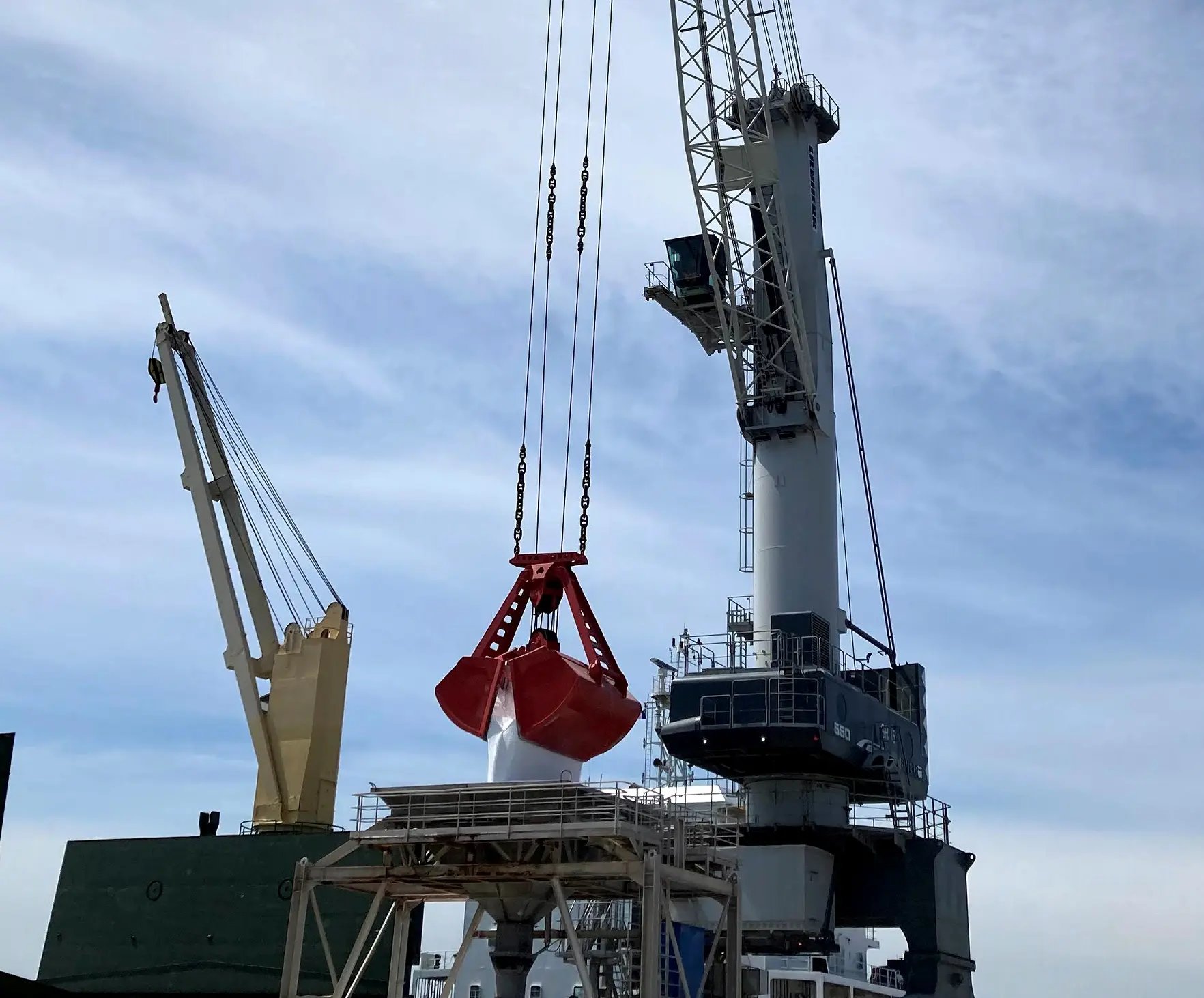
Grabbing your attention with the Clamshell Grab
Building long-term partnerships on trust with the innovative nemaX
A Partner
You Can Count On
As a family business we take pride in thinking on the long run and be the partner you can rely on. If you have any questions, please reach out. Our team is here to support you.

We're here to help you make the right choice for your operation.
Martine Dekker - Grootveld,
Sales manager