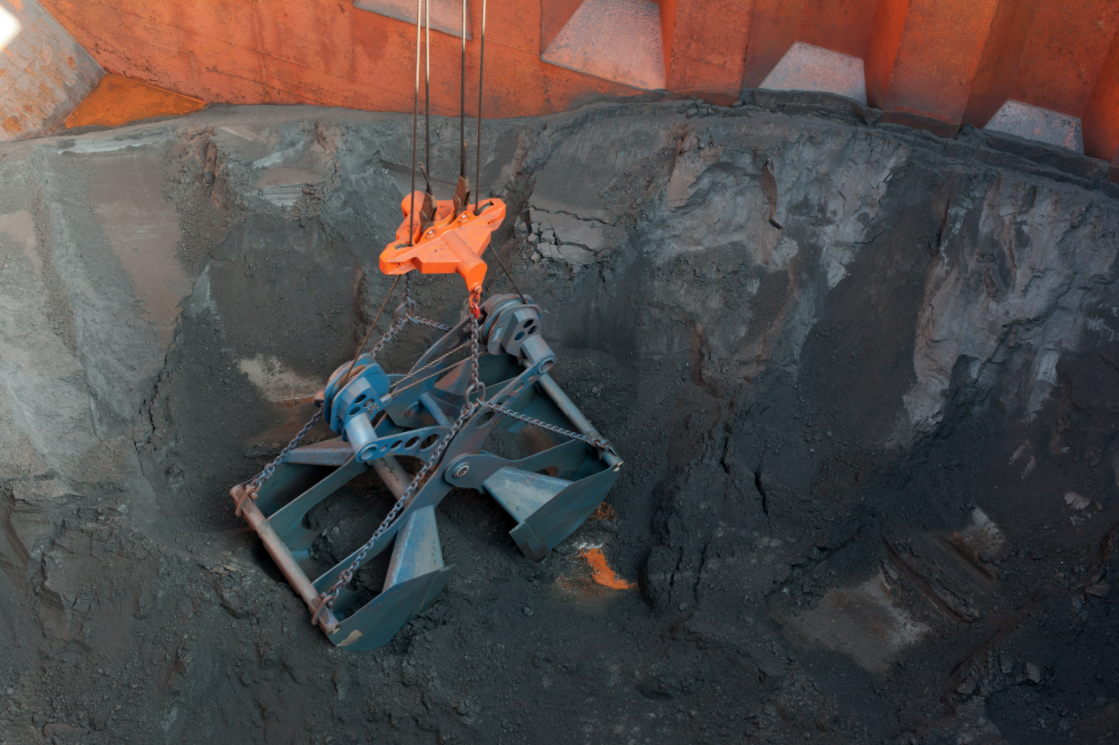

Steel wire rope terminations are commonly used to connect steel wire ropes. In the dry bulk industry, steel wire ropes are used in both cranes and grabs.
Nemag Rope Pear Sockets and Quick Release Links are well-established products for this specific and highly demanding application. They enable the safe and efficient connection and disconnection of grabs to and from a crane, hence supporting a more efficient changeover of grabs. These small but important components play a key role in daily operations at bulk terminals.
In this blog, we look at the main factors to consider when choosing a rope connection and explain how Quick Release Links and Rope Pear Sockets work together as part of a safe and reliable connection between crane and grab.
What determines the right rope connection?
A rope connection should never be selected as an isolated component. It forms part of a system in which the crane, steel wire rope and grab all need to work together. Choosing a connection therefore means looking beyond the component itself and understanding the requirements of the complete lifting system.
1. Steel wire rope diameter and strength
The steel wire rope is one of the main starting points. Its diameter and quality influence the size and type of connection that can be used. A component should therefore not be selected simply because it physically fits the rope. The connection needs to match the specifications of the steel wire rope and the loads it will experience during operation. Having the correct rope information available from the start helps avoid making assumptions later in the selection process.
2. The crane working load
The loads involved in the application also determine what the connection needs to withstand. The rope connection forms part of the complete lifting system and needs to be suitable for the forces involved during operation.
This is where safety becomes the main consideration. The grab, rope and connection need to work as one system, rather than being assessed separately. Looking only at the rope diameter or grab size therefore gives an incomplete picture. The crane load also needs to be taken into account.
3. The crane configuration
The crane itself can also affect which connection is suitable. One aspect that may need to be checked is the size and configuration of the crane and/or grab trolley sheaves. The relevant dimensions are often available in the crane manufacturer's documentation. These specifications help determine whether the rope and its end connection fit correctly within the existing crane setup, especially when the rope terminations are passing over the crane/grab trolley sheaves.
This is a detail that can easily be overlooked, but it can be important when checking the complete rope connection.
4. The grab configuration
The objective is to create a setup in which the steel wire rope, rope end connection, link and grab are correctly matched. Changing one part of this system can therefore also affect the requirements for the other components.
The role of Rope Pear Sockets and Quick Release Links
A Rope Pear Socket forms the end connection of the steel wire rope. Combined with a Quick Release Link, it forms part of the connection between the crane ropes and the grab.
The two components have different functions within that connection. The Rope Pear Socket connects to the end of the steel wire rope and needs to withstand the extreme and highly dynamical forces and movement of daily grab operation. The Quick Release Link provides the connection towards the grab. Its main practical advantage is that it makes connecting and changing grabs more straightforward. This becomes particularly relevant in operations where different grabs are used for different materials or applications. The connection can be released and reconnected more easily, while the technical suitability of the complete rope-to-grab setup remains the priority.
Together, the Rope Pear Socket and Quick Release Link provide a connection that combines safe load transfer with the flexibility needed in day-to-day grab operations.
Safety comes first
Rope connections operate under the most extreme and arduous working conditions with frequently occurring impacts and collisions of the rope terminations against haitch coamings of ships. Correct selection is therefore primarily a safety consideration. The crane load, steel wire rope diameter and quality, grab configuration and relevant crane dimensions all need to be taken into account.
Grab applications also involve more than static loads. The connection is exposed to repeated movement, contact and impact during operation. This places specific demands on the materials and construction, particularly when it comes to resistance to wear over time. This is why the quality of the rope connection matters just as much as selecting the correct dimensions.
For operators, this means that inspection remains important throughout the working life of the connection. A setup should not only be suitable when first installed; its condition also needs to be monitored during use.
For Nemag, these safety requirements are an important starting point in the design of its rope connections. The patented material composition used for the Rope Pear Socket combines strength with resistance to impact and wear, while retaining the elasticity needed for demanding grab applications. Nemag's rope termination and connection products are subject to strict manufacturing and quality checks with full traceability of the material and heat treatments and supplied with the relevant certificates.
What information is needed to select the right rope connection?
As the earlier sections show, the rope connection needs to be matched to the complete lifting system. That starts with having the right technical information available.
Key specifications include:
- The working load of the crane
- The diameter of the steel wire rope
- The strength or quality of the steel wire rope
- The grab configuration
- The relevant dimensions of the crane sheaves
These details help determine the right size and configuration of the Rope Pear Socket and Quick Release Link. They also determine whether a Standard or S-type Rope Pear Socket is the better fit.
It is also worth reviewing the connection when something in the setup changes. A different steel wire rope, another grab or changes to the crane configuration can also affect the requirements for the rope connection.
Looking at the complete rope-to-grab connection
Choosing the right rope connection is ultimately about making sure all parts of the system work together. The crane, steel wire rope, Rope Pear Socket, Quick Release Link and grab should therefore be considered as one complete setup.
If you are reviewing an existing setup or are unsure which configuration fits your application, we can help you assess the relevant specifications.

Already know what you need?

Heavy Melting Scrap (HMS) vs. Shredded Scrap: Which grab should you use?
Next-generation clamshell grabs for higher efficiency and lower costs