Dry bulk materials and applications: how material behaviour affects grab selection

Introduction

Dry Bulk Materials & Applications

Dry bulk handling starts with understanding the material. Every material behaves differently during loading, unloading, lifting and discharge. Bulk density, abrasiveness, moisture, particle size and flow behaviour all influence how efficiently and safely the material can be handled.

For ports, terminals and transshipment operations, these material characteristics are not small details. They affect grab selection, crane performance, vessel turnaround, maintenance needs and the overall handling process. A grab that works well with one material may need a different configuration for another.

On this page, you’ll find a clear overview of the key material factors that influence dry bulk handling. Each topic is supported by practical insights and real-world considerations, helping you understand how material behaviour affects productivity, equipment choice and long-term performance.


01

Understanding dry bulk material behaviour

Dry bulk materials vary widely in how they behave during handling. Some materials are free-flowing and easy to handle. Others are dense, abrasive, compacted, dusty, sticky or irregular in shape. These differences influence how the grab enters the material, how well it fills, how stable the load remains during movement and how cleanly the material leaves the grab.

That is why material behaviour should be considered at the start of the equipment selection process. Our product filter helps connect material characteristics to the right handling solution by allowing users to filter grab solutions based on material and crane type.

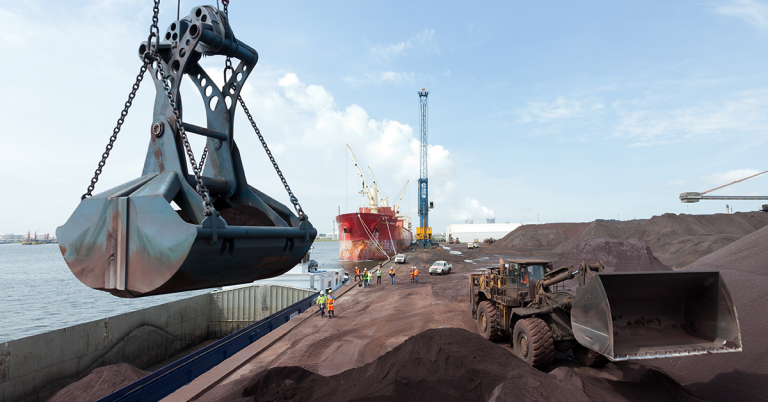
We work with a broad range of dry bulk materials, including bauxite, coal, iron ore, aggregates, cereals and other dry bulk materials. Each material group has its own handling requirements. For example, iron ore is typically heavy and abrasive, while cereals require a more controlled approach focused on product care and efficient handling.

Several articles show how material behaviour influences equipment choice. The blog Bauxite grab efficiency: tips for handling different densities and types explains how variations in density and material type influence grab selection. The article Biomass handling: choosing the best grabs for efficiency & safety shows how lighter, more sensitive or irregular materials require a different handling approach.

Understanding material behaviour is the basis for every next decision. It helps determine the required grab type, the expected fill rate, the need for wear protection and the best match with the crane and working environment.

Product-Feature-Placeholder-04-1
Product-Feature-Placeholder-06-1
Product-Feature-Placeholder-05-1


02

Bulk density and payload

Bulk density has a direct influence on productivity. It determines how much material can be lifted in each grab cycle and how the payload relates to the crane’s safe working load. A high-volume grab may seem productive, but if the material is dense, the crane may reach its lifting limit before the grab is completely filled.

This makes the balance between grab volume, grab weight and payload important. The aim is not simply to move the largest possible volume, but to use the available crane capacity effectively. A well-matched setup allows more material to be handled per cycle while staying within safe operating limits.

Bauxite is a useful example because its density can vary depending on origin, moisture and particle composition. The article Bauxite grab efficiency: tips for handling different densities and types explains that the right grab solution and unloading procedure depend on the material type, vessel size, crane type and whether the operation uses shore-based cranes or floating transshipment.

Bulk density also plays an important role in iron ore handling. Iron ore is a dense material, which means payload, grab deadweight and crane capacity need to be carefully aligned. The article Optimizing productivity and vessel turnaround for iron ore handling connects this directly to productivity and vessel turnaround.

For operators, bulk density is one of the first values to assess. It helps define the realistic payload per cycle and prevents equipment from being selected on nominal grab volume alone.


03

Abrasiveness, wear and grab lifespan

Wear is a normal part of dry bulk handling. Its development depends on the material, the number of cycles, the operating environment and the way the grab is used and maintained. Abrasive materials such as iron ore, minerals, gabbro and stones place higher demands on cutting edges, lower shell sections and other high-contact areas.

The article How to increase grab lifespan in abrasive bulk operations explains how wear-resistant steels, hard-facing lip plates and additional wear strips can help protect these areas. In demanding applications, the right wear protection can support a longer service life and more consistent performance.

Wear management is also connected to handling quality. When shells, edges and moving parts remain in good condition, the grab can continue to close properly, retain material effectively and discharge in a controlled way. This supports cleaner handling and reduces unnecessary clean-up work.

Extending grab lifetime starts with the right design, but continues with daily use. Respecting operating limits, following inspection routines and responding to early changes in grab behaviour all help maintain performance over time. Every Nemag grab is delivered with a comprehensive Operation & Maintenance manual. This documentation provides operators, engineers and maintenance teams with practical guidance throughout the lifecycle of the equipment.


04

Material flow and handling behaviour

Flow behaviour determines how easily the material moves into and out of the grab. Some materials flow freely and discharge quickly. Others compact in the vessel, stick to the shells, bridge during discharge or require more force to penetrate.

Penetration is especially important when material becomes compacted during transport or storage. If the grab cannot enter the material effectively, filling may become inconsistent and additional cycles may be needed. Discharge behaviour is equally important. A grab that fills well but does not release material cleanly can slow down the handling process and increase clean-up work.

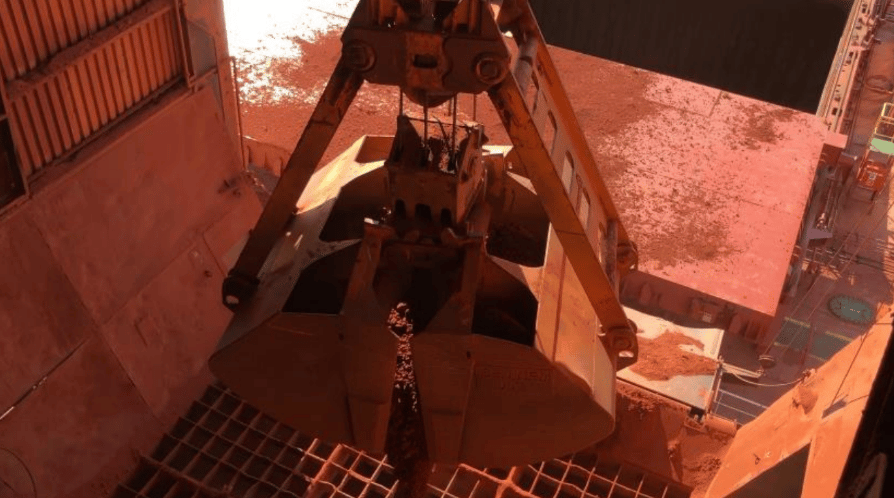
Bauxite again shows why flow behaviour matters. Our bauxite page describes a material that can vary widely in density, moisture and appearance. Depending on the conditions, it can behave differently during penetration, filling and discharge. The related blog on bauxite grab efficiency connects this to the choice between lightweight clamshell grabs and NemaX for pelletized bauxite.

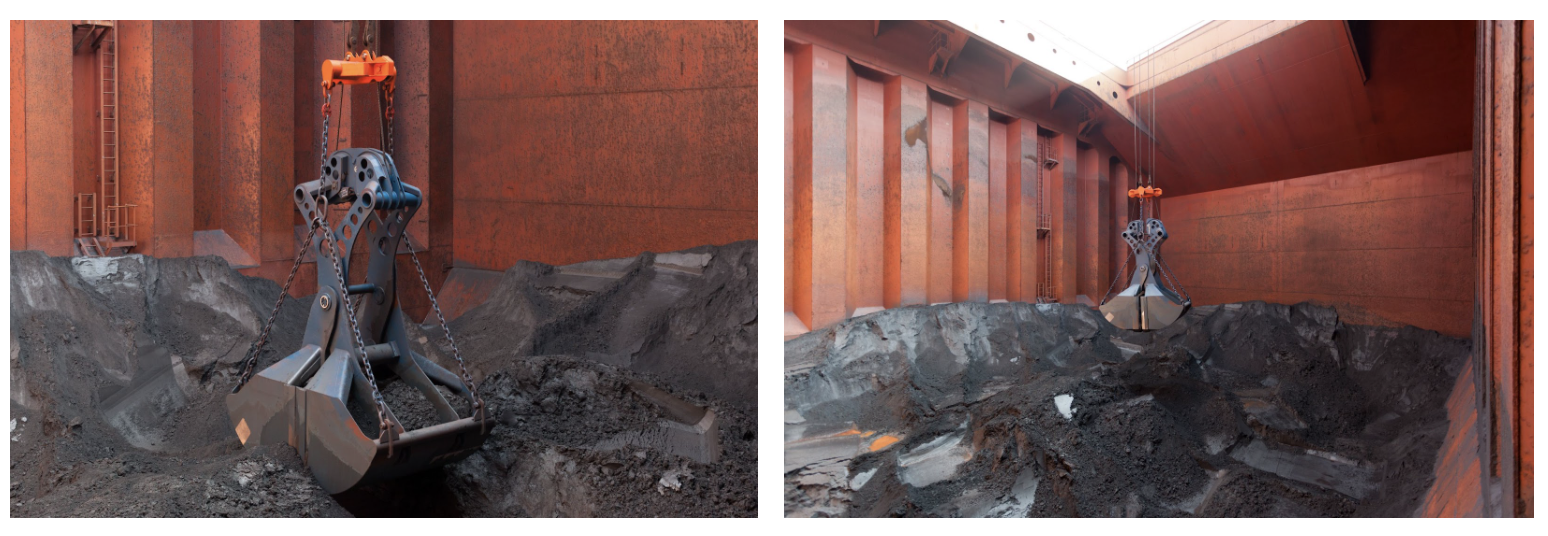
Iron ore concentrate provides another example. In the article Boost iron ore handling: best grabs for hard and abrasive materials, compacted iron ore concentrate is discussed in relation to grab choice and filling performance under more difficult digging conditions.

Flow behaviour directly affects productivity. A stable filling pattern, controlled discharge and reduced clean-up phase all contribute to a more predictable operation.


05

Moisture, dust and product care

Moisture and dust can change how a material behaves during handling. Moisture can make material heavier, stickier or more compacted. Dust can influence safety, housekeeping and environmental control. For some materials, product care is also important because breakage, contamination or degradation can affect the value of the cargo.

Biomass is a clear example. The blog Biomass handling: choosing the best grabs for efficiency & safety explains that wood pellets and wood chips require different handling approaches. For wood pellets, the clamshell grab is described as a preferred choice because of its closed shells, high payload and low deadweight. For wood chips, the orange peel grab is mentioned as a possible option.

Cereals require a different focus. Handling needs to support controlled discharge, efficient loading or unloading and careful treatment of the product. Our cereals material page can guide readers into this application, while coal connects more strongly to dust control, material loss and safe handling.

Moisture also affects heavier bulk materials. Bauxite and iron ore can both behave differently depending on moisture content and compaction. These changes influence fill rate, penetration, discharge and clean-up.

For operators, the key is to look beyond the material name. The same commodity can behave differently depending on origin, storage, weather exposure and vessel conditions. Understanding these variations helps define a grab solution that supports both productivity and careful handling.


06

Matching material to grab and crane type

Material characteristics only become useful when they are translated into equipment choices. The right grab and crane combination depends on what the material requires during loading, lifting, movement and unloading.

Our NemaX grab is designed for high-productivity dry bulk handling. The Clamshell grab is widely used for fast and reliable handling of a wide variety of dry bulk materials. The Scissors grab is relevant when strong digging and clean-up performance are important. The Orange Peel grab is designed for difficult-to-handle materials such as scrap metal and biomass.

For a broader overview of our grab solutions, you can download the Nemag product brochure. If you want to explore a specific grab type in more detail, the dedicated brochures provide more information about the Clamshell grab, Scissors grab and Orange Peel grab.

Crane type also matters. The same material may be handled with mobile harbour cranes, ship unloaders, transshipment or floating cranes or level-luffing cranes. Each crane setup has its own lifting capacity, rope configuration, cycle behaviour and working environment.

To explore suitable combinations, our product filter helps users navigate available solutions based on material and crane type. To make the productivity impact more tangible, our comparison calculator helps calculate the potential productivity gain of NemaX compared with a current grab setup.

The goal is not only to select a grab that can handle the material. It is to select a grab and crane setup that supports stable filling, safe lifting, efficient unloading and reliable performance over time.

Conclusion

Understanding material behaviour as the basis for better handling

Dry bulk materials do not all behave the same way. Bulk density influences payload. Abrasiveness affects wear. Material flow determines how efficiently the grab fills and unloads. Moisture, dust and product care influence safety, cleanliness and handling quality. Together, these factors define what the equipment needs to do.

By understanding these characteristics, operators can make better decisions about grab type, crane compatibility, maintenance expectations and productivity targets. This helps avoid selecting equipment based only on volume or general material category.

Our material pages for bauxite, coal, iron ore, aggregates, cereals and other materials provide more context for specific applications. To explore suitable grab and crane combinations, use our product filter. For a closer look at grab performance in relation to handling targets, you can also explore the NemaX grab, Clamshell grab, Scissors grab and Orange Peel grab.

If you want to structure your selection process, the 3-step grab selector can help identify the main factors that influence the right choice. For operations where NemaX may be relevant, you can also request a NemaX demo to explore what the concept could mean for your handling process.

The better the material is understood, the more accurately the handling setup can be matched to the operation.

Keep exploring

Latest blog posts

Boost iron ore handling: Best grabs for hard and abrasive materials
Chrome ore

Boost iron ore handling: Best grabs for hard and abrasive materials

Apr 16, 2026, 3:28:29 PM 8 min read
Bauxite grab efficiency: Tips for handling different densities & types
Scherm­afbeelding 2024-01-12 om 13.13.14

Bauxite grab efficiency: Tips for handling different densities & types

Apr 16, 2026, 3:28:05 PM 4 min read
Optimizing productivity and vessel turnaround for iron ore handling
nemag-wp1-1200x628-v1-768x402

Optimizing productivity and vessel turnaround for iron ore handling

Apr 16, 2026, 3:23:59 PM 2 min read

Contact us

A Partner
You Can Count On

As a family business we take pride in thinking on the long run and be the partner you can rely on. If you have any questions, please reach out. Our team is here to support you.

Footer-Conversion-Placeholder-V2

We're here to help you make the right choice for your operation.

Martine Dekker - Grootveld,
Sales manager

Request a quote Ask us a question